MBS Metering Spool
Mixer + BS&W + Sampling — one spool, one flange face to flange face, everything in the right order
Three Jobs, One Spool
Getting a defensible water measurement out of a crude stream takes three things in sequence: the water has to be dispersed, it has to be measured, and a sample has to be drawn that genuinely represents what went past. Done separately, that is three pipe sections, three sets of spacing rules, three chances for the layout to undo the instrument.
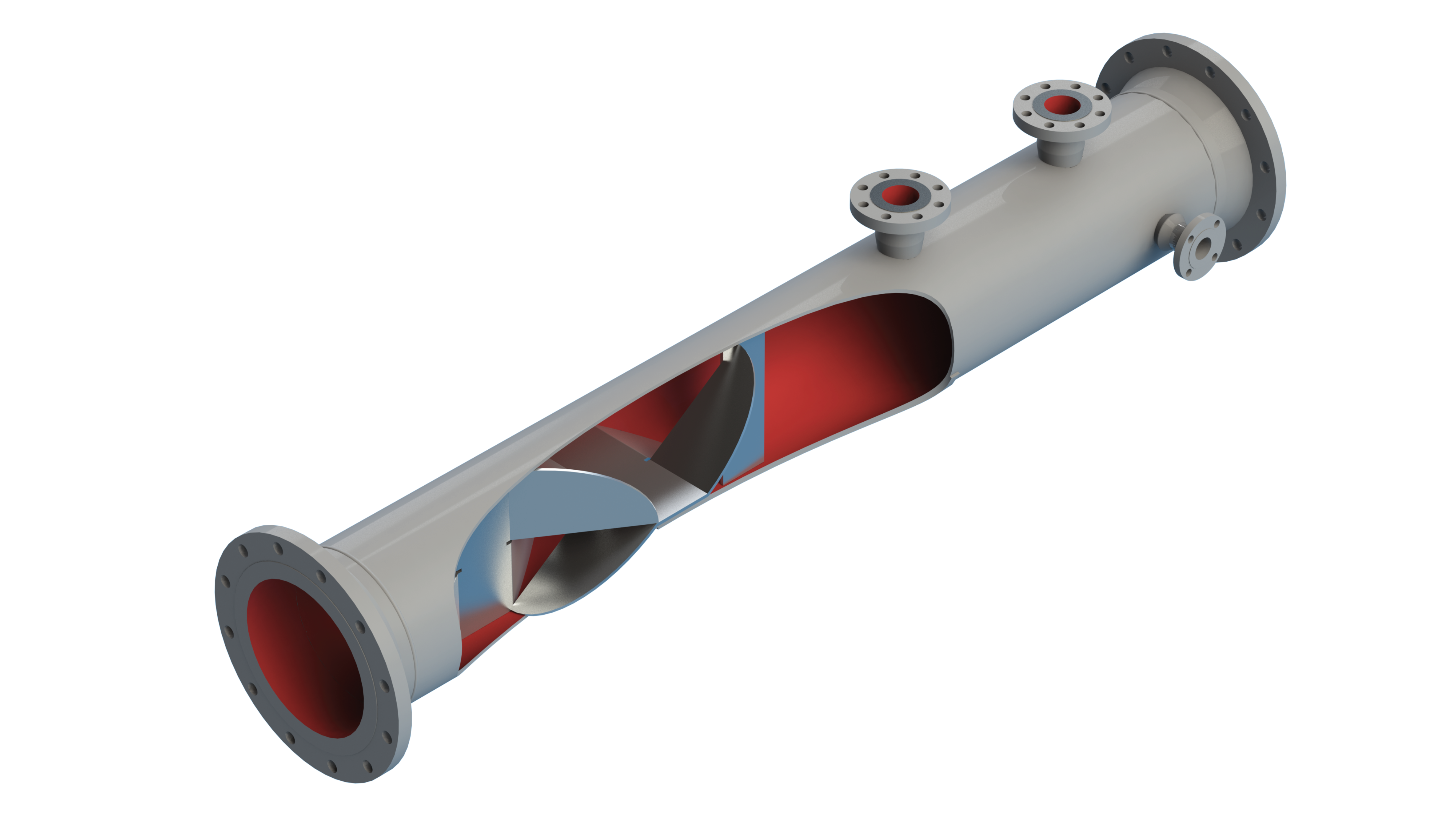
The MBS — Mixer + BS&W + Sampling — puts all three into one fabricated spool. It arrives as a single piece with matching flanges at each end: mixing elements first, then the analyzer port, then the sample point, already at the spacing the measurement wants. You bolt in one item instead of assembling a measurement section on site.
What Is Inside the Spool
The mixing elements
A ZTMX static mixer sits at the inlet end. It disperses free water through the oil and straightens the profile, so what reaches the analyzer and the sample point is a homogeneous stream rather than a stratified one. No moving parts, no power, and a pressure drop small enough to disappear into the line.
The BS&W measurement port
Downstream of the elements, at the point where the stream is best conditioned, the spool carries a port for the water cut analyzer. It is prepared for whichever ZT-100 the application calls for — the port, the nozzle and the spacing are set at the drawing stage, not improvised at the site.
The sampling point
A sample probe port sits in the conditioned section, positioned so a grab or automatic sample is drawn from a properly mixed stream. It suits manual sampling, a fast loop, or a full automatic sampler, and it takes the probe style your procedure already specifies.
Position Is What Makes a Sample Representative
Sampling standards are, to a large extent, standards about geometry. How far downstream of the mixer, how far from a bend, where in the cross-section the probe tip sits, how much stream conditioning has happened before the sample is drawn — get those wrong and the laboratory result describes the sample point, not the cargo.
The MBS is laid out around that. The distance between the mixing elements, the analyzer port and the sample probe follows the sampling practice set out in API MPMS Chapter 8.2, ISO 3171 and IP/TR 2570, and it is fixed in the fabrication rather than left to whoever assembles the line. The spool that arrives on site is the spool that was engineered.
That matters most where the number has money attached to it — custody transfer, LACT and ACT skids, loading and discharge lines, and anywhere a BS&W figure ends up on a bill of lading.
Any ZT-100 Fits
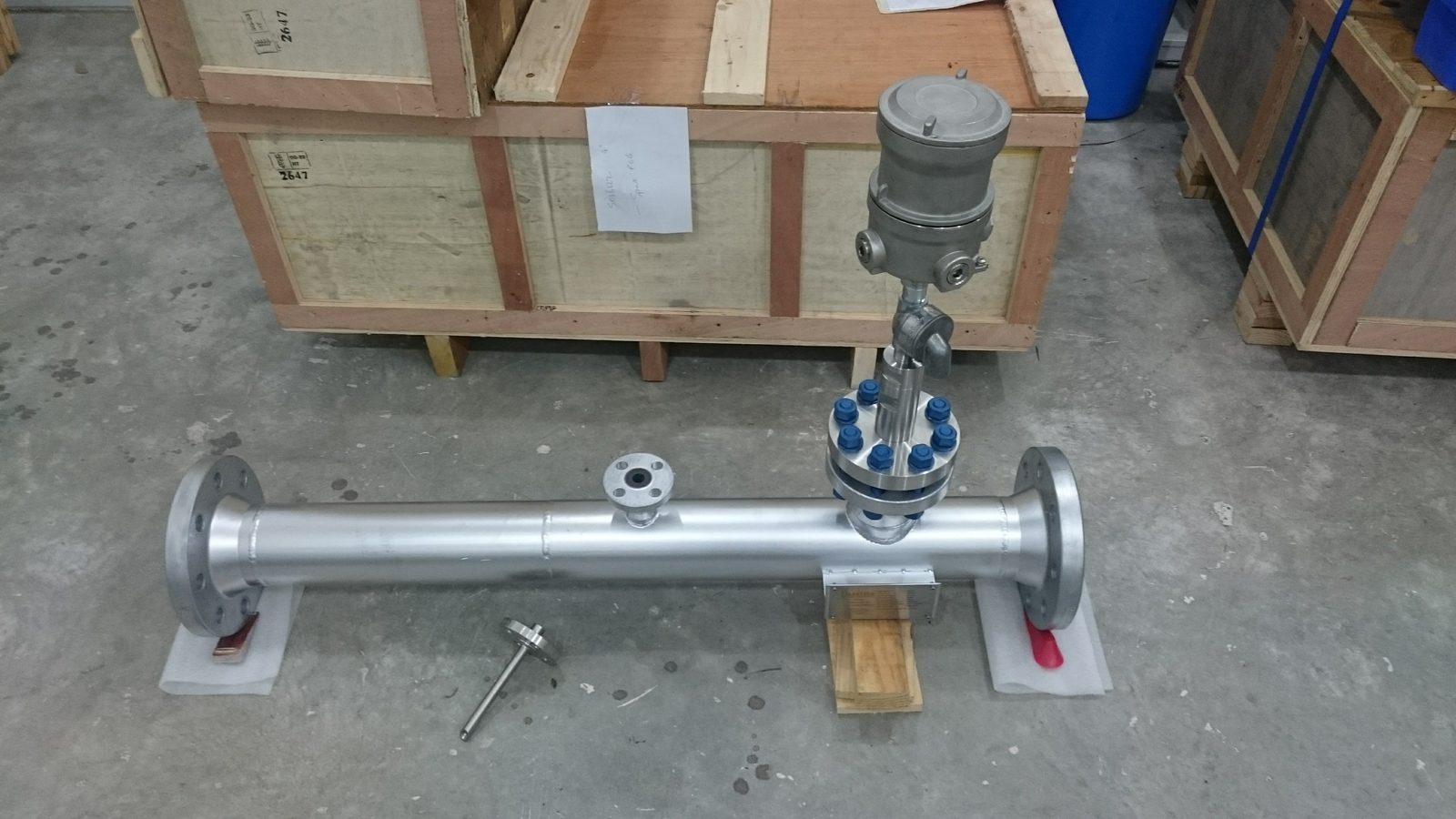
The MBS is not tied to one analyzer. The measurement port is engineered around whichever ZT-100 the duty calls for, and the rest of the spool does not change.
I-Series — insertion
An insertion probe entering through a nozzle in the spool wall. The retractable version can be taken out under pressure, which is what you want on a line that does not stop. The natural choice on larger bores, where an inline body would be an expensive way to measure.
F-Series and S-Series — inline
A full-bore sensing section built into the spool itself, so the analyzer becomes part of the pipe rather than something bolted onto it. Nothing intrudes into the flow, and on smaller bores it gives the strongest signal across the full cross-section.
Whichever is fitted, the analyzer sees the same conditioned stream the sample probe sees — which is the whole point of putting them in one spool.
Built to the Line, Not to a Catalogue
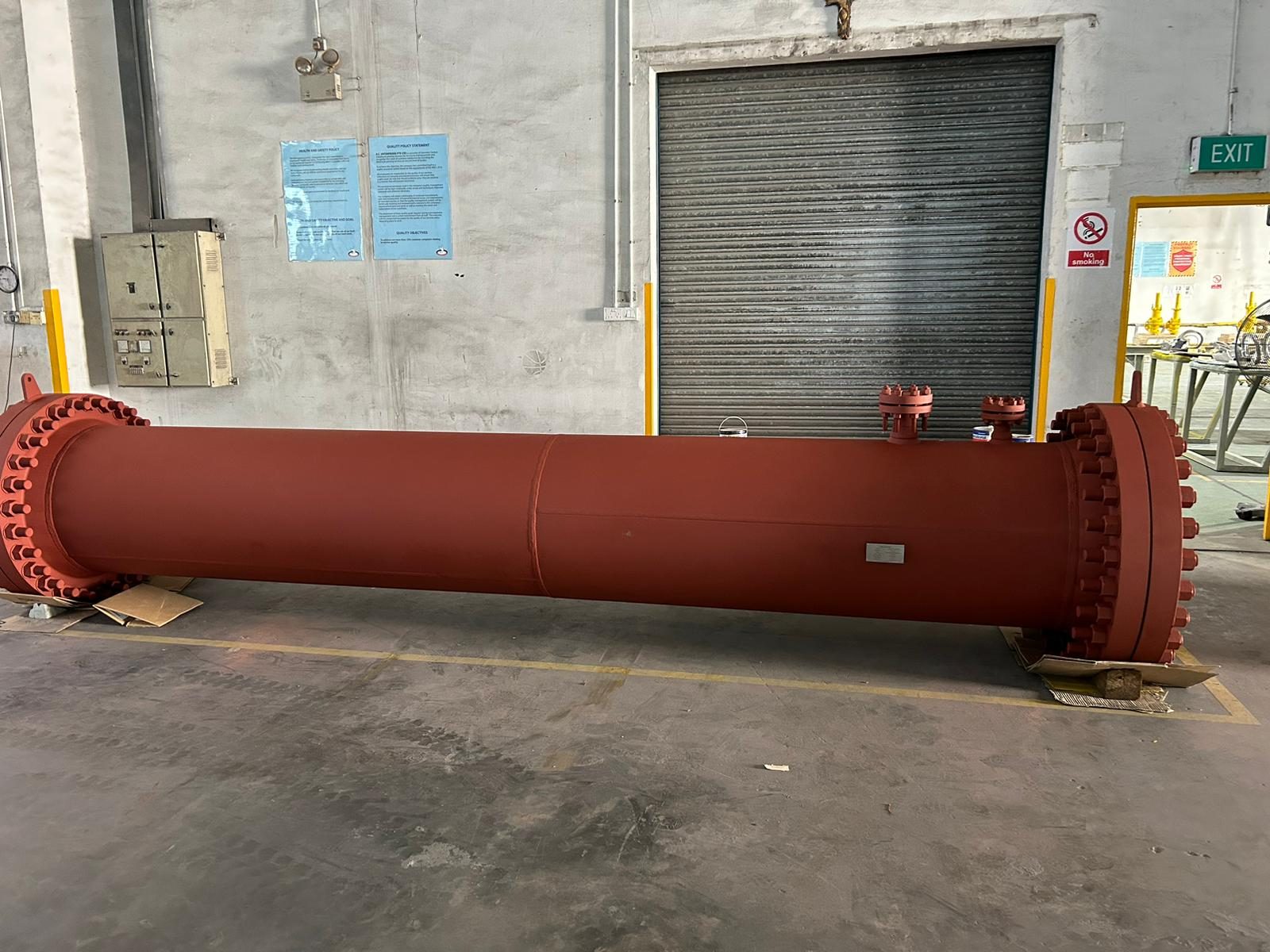
Every MBS is made to the line it goes into. Small-bore units for a well test package and large-diameter units for an export header come off the same drawing board — the 30-inch spool shown here and the compact unit beside it are the same product at two ends of the range.
Pressure classes run from Class 150# through to Class 1500#. Carbon steel or stainless as the service requires, with other alloys where the fluid demands them, and flange facings, coatings and certification packages to the project specification. Chemical injection quills can be built into the inlet end where the stream needs treating before it is mixed.
Tell us the line size, the class, the fluid and which ZT-100 you want in it, and we will draw the spool around that.
In the Shop and in the Field
A 30-inch MBS spool built for an export line, ready for coating inspectionA compact MBS — mixer, analyzer port and sample port between two flange faces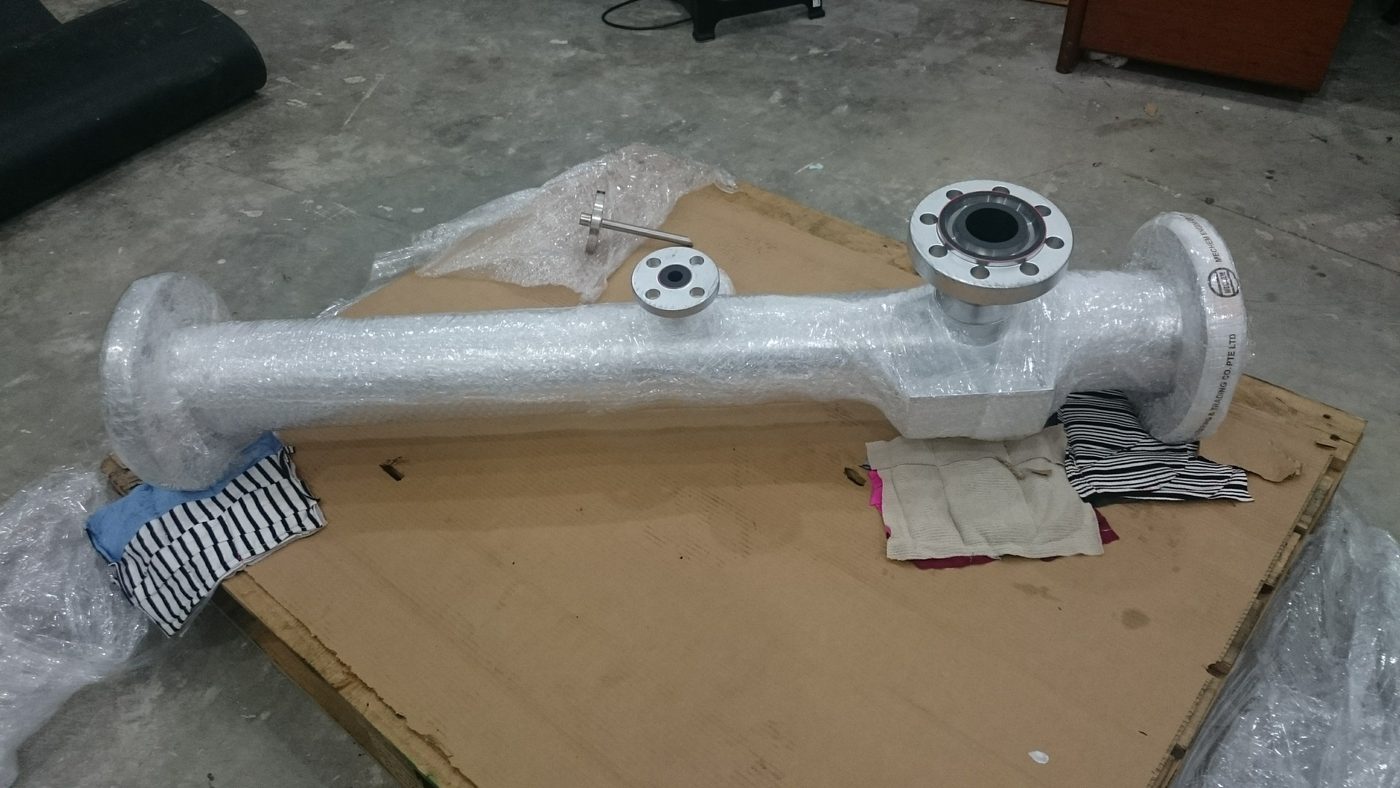 Analyzer and sampling connections on the conditioned section
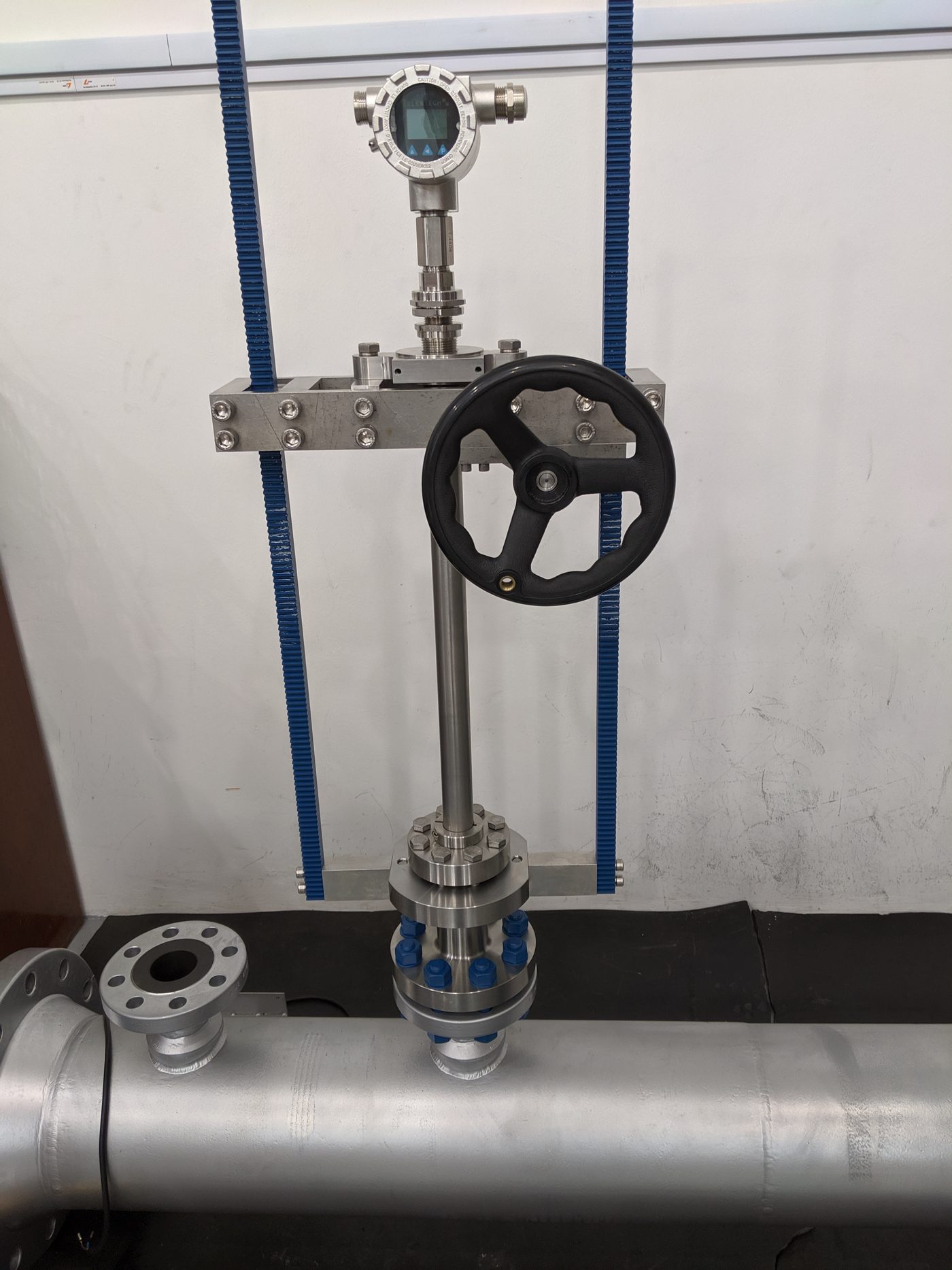 An insertion analyzer with a retraction assembly on an installed line
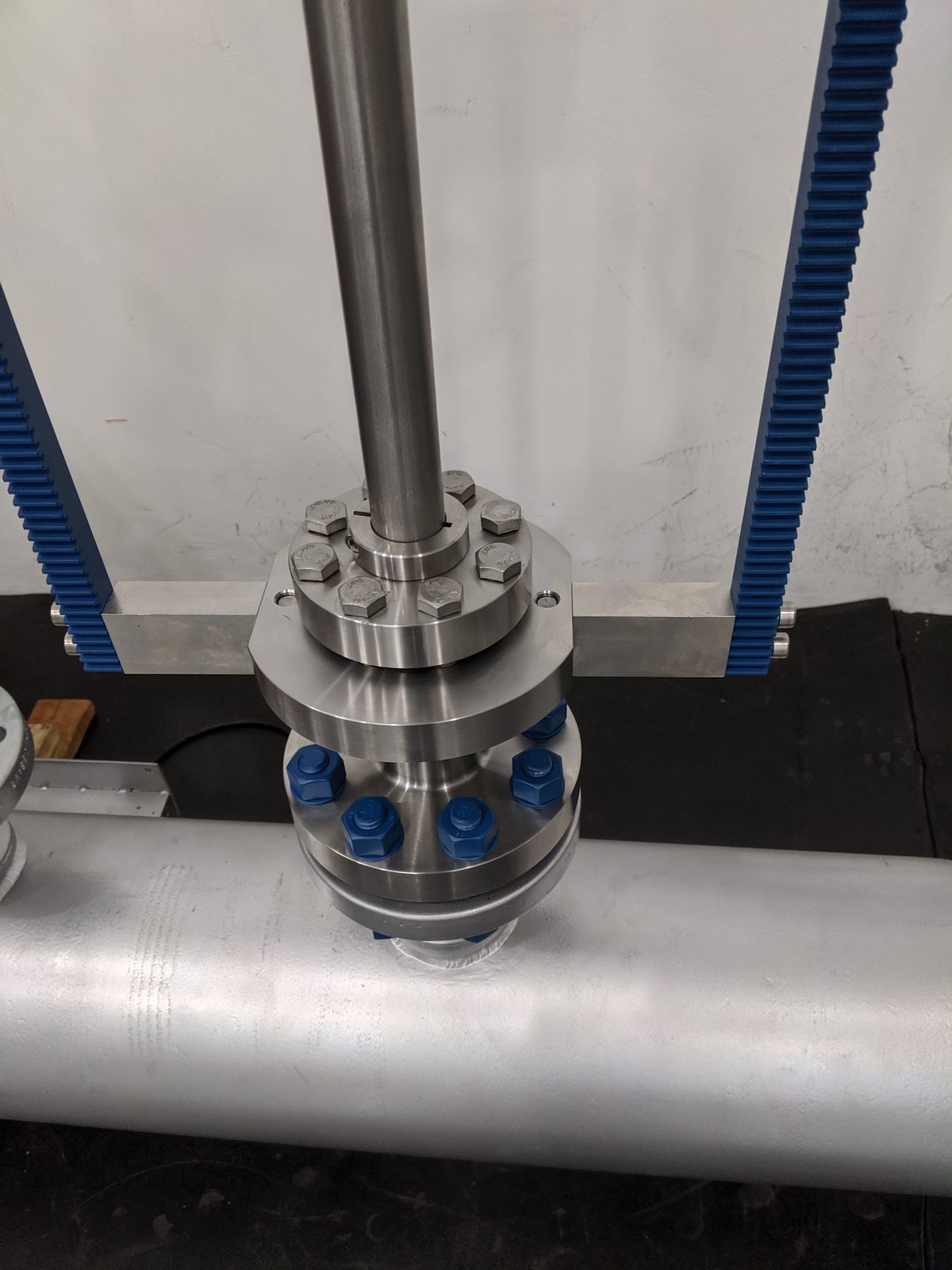 Detail of the insertion nozzle and gland at the spool wall
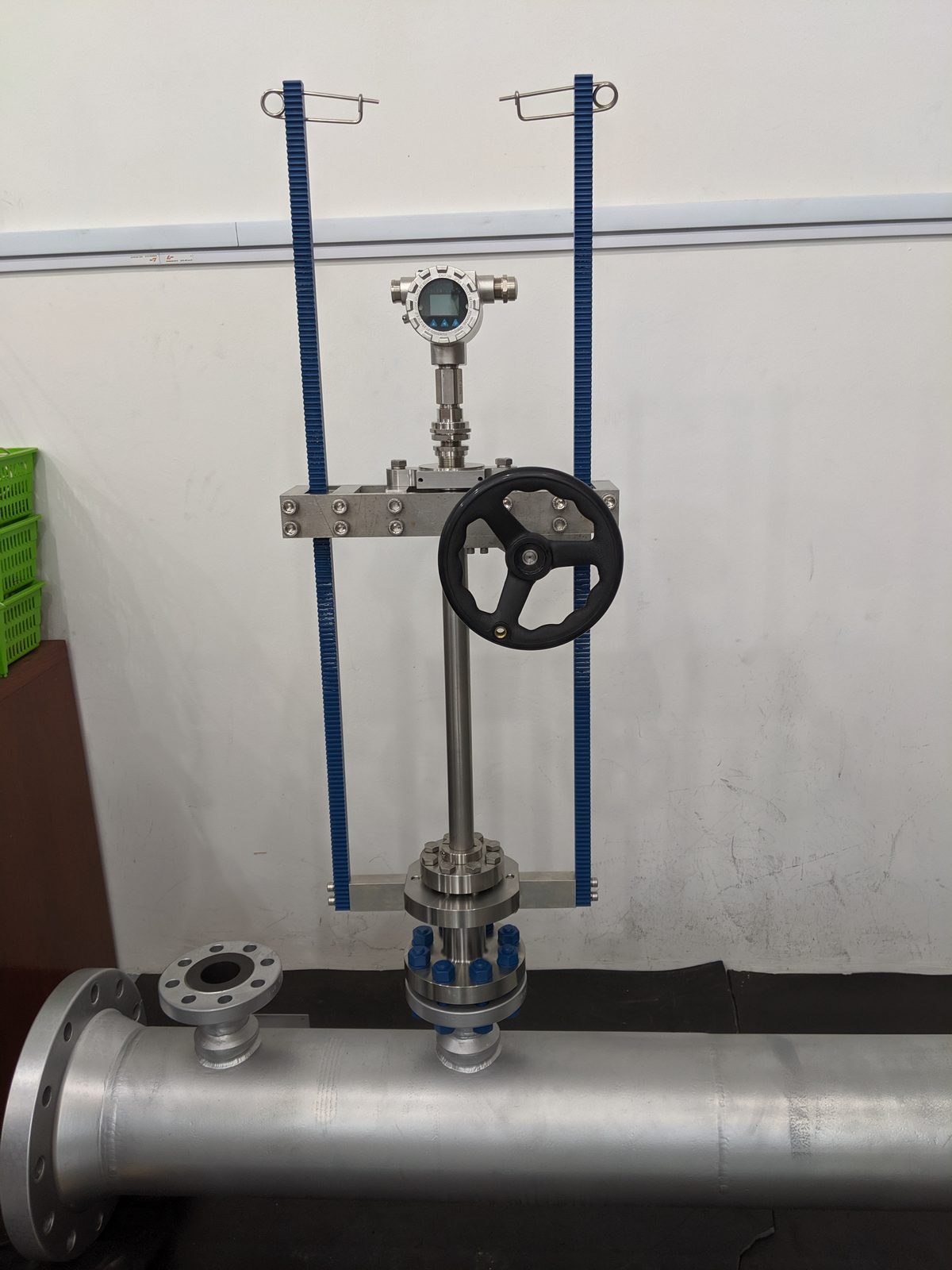 The same installation from the opposite side
Talk to Us About an MBS
Send us the line size, pressure class, fluid and the water cut range you need to cover. We will come back with a spool arrangement — mixer, analyzer and sample point — drawn around your line.